一个被恰当重塑的过往
2017
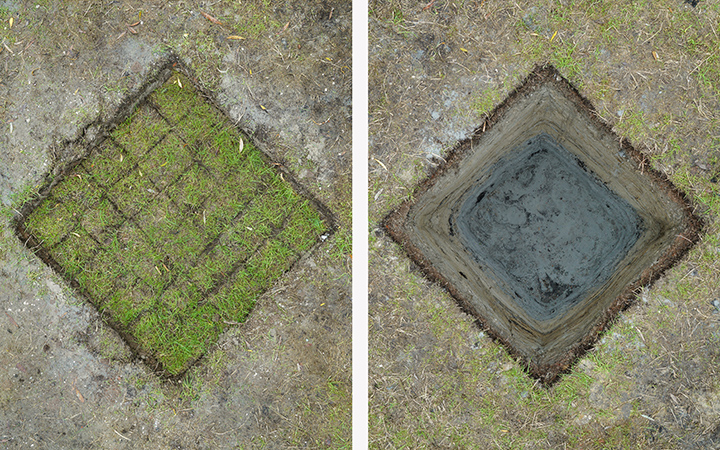
《一个被恰当重塑的过往》以一次针对人类世地层的物质干预为起点。项目选取阿姆斯特丹 ADM 一处二战后形成的填海土地,将填海层的厚度视为人类世在当地呈现出的地质深度,并在其中开挖一平方米区域。挖出的土壤经过筛分、清洗,移除建筑残渣、微塑料及其他人为物质,再回填至原处,形成一个人工地质标记——一块被称为“无人类痕迹”的土地。这一标记带有内在悖论:它试图清除人类活动留下的痕迹,却存在于一片本身由人类工程塑造的土地之上。
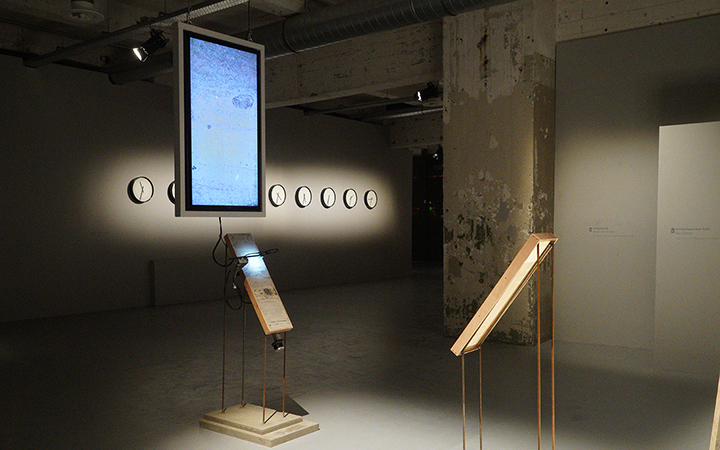
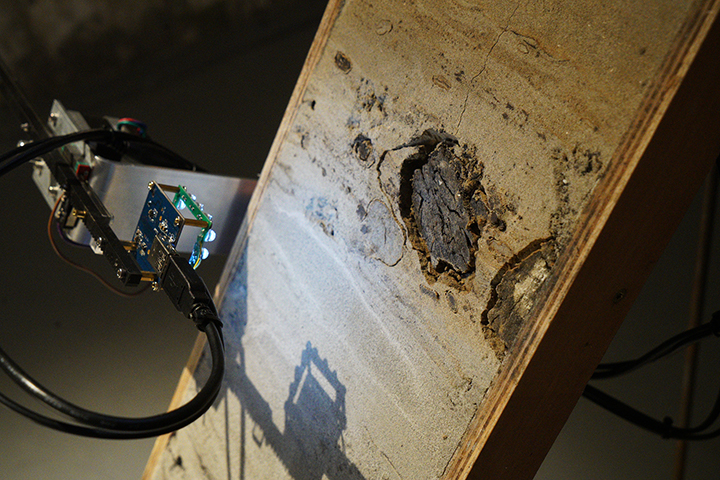
装置通过四组土壤柱样呈现这一干预。每组由两份土壤剖面样本组成,分别取自开挖区域内经处理的土壤与区域外未经处理的土壤。摄像头持续拍摄这些样本,并将图像传送至在线计算机视觉算法,检索视觉上相似的图像,同时播放其他相关影像。被移除的建筑残骸铺陈于地面,与随机摆动的风向标及引用马歇尔计划宣传海报语句的霓虹灯共同构成另一组装置。
项目将这些痕迹视为盖娅(Gaia)这一复杂互联系统历史的一部分:它们既包含人类活动的遗留物,也关联着生物地球化学过程与全球流动。由此,作品讨论人类、环境与地球上其他存在之间相互交织的关系,并从非人类中心主义视角,质疑人类作为自然“福祉”定义者的角色。
项目与阿姆斯特丹自由大学环境与健康系资深科学家 Heather Leslie 合作完成,并获 2017 年 Bio-Art & Design Award。
A Felicitous Neo-past
2017
A Felicitous Neo-past begins with a material intervention in a layer of reclaimed land in Amsterdam. At ADM, a site reclaimed after the Second World War, the project treats the thickness of the reclaimed layer as the physical depth of the Anthropocene at this location. A one-square-metre area was excavated, and the soil was sorted and washed to remove construction rubble, microplastics and other human-made materials, before being returned to the excavation. This created a man-made geological marker: a piece of “land without human traces.” The marker is inherently paradoxical: it seeks to remove traces of human activity while remaining part of a landscape shaped by human engineering.
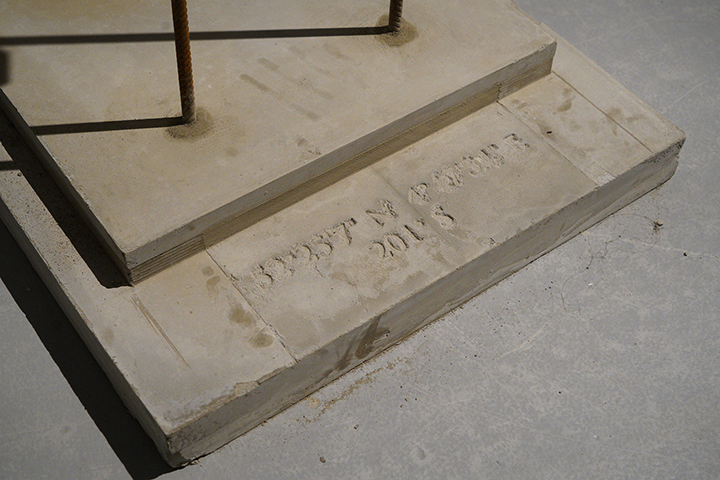
The installation presents this intervention through four pairs of soil monoliths. Each pair compares a sample of remediated soil from inside the excavation with an untreated sample from outside it. A webcam continuously streams close-up images of the samples to an online computer-vision algorithm, which returns visually similar images; related images and videos are also displayed. The removed rubble is spread across the floor, alongside a randomly moving wind vane and a neon sign quoting a slogan from a Marshall Plan poster: “Whatever the weather, we only reach welfare together.”
The project understands these traces as part of the history of Gaia as a complex interconnected system. They include the residues of human activity, but also point to biogeochemical processes and global movements. From a non-anthropocentric perspective, the work considers the entangled relations among humans, the environment and other earthly entities, while questioning the human claim to determine what constitutes nature’s “welfare.”
The project was developed in collaboration with Heather Leslie, senior scientist at the Department of Environment and Health at Vrije Universiteit Amsterdam, and received the 2017 Bio-Art & Design Award.
Venue support: ADM Amsterdam
Sponsored by: Zonmw
Facilitate by: MU ArtSpace
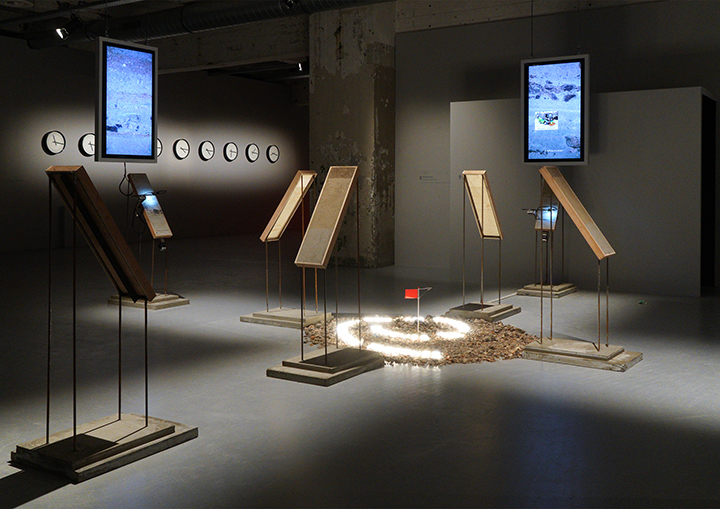
Installation view
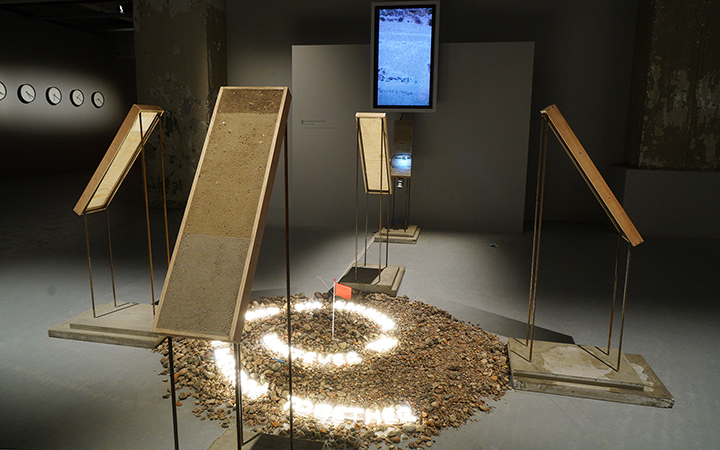
Soil monoliths from the inside of the hole(remediated earth)
Soil monoliths from the outside of the hole(reclaimed earth)
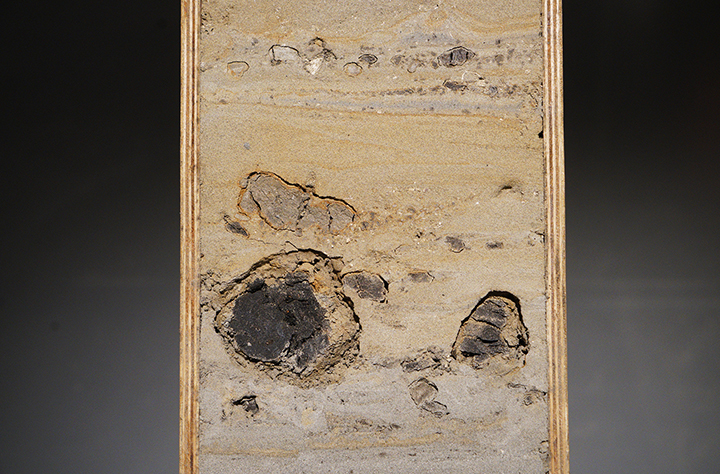
Close up of the soil monolith(reclaimed earth)
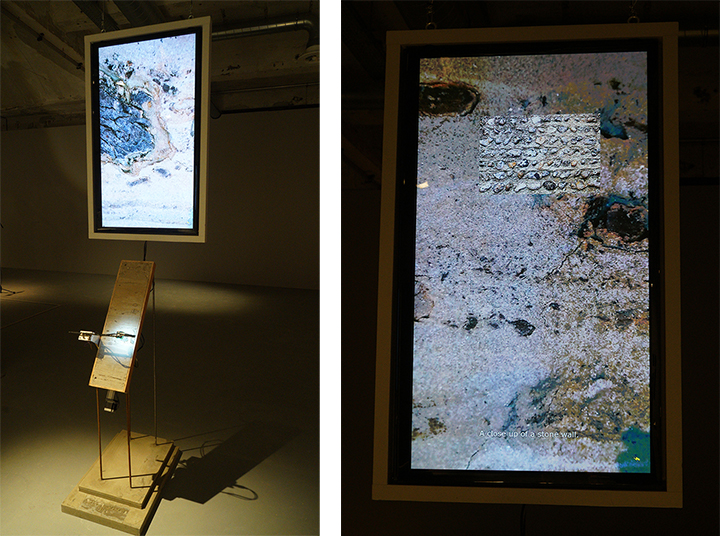
The webcam system is living streaming the close up of the monolith while sending photo to an online computer vision algorithm and getting back visually similar images, and also screening other related video and images, which reveals the interconnection among the artificial land, past of humanity and random entities
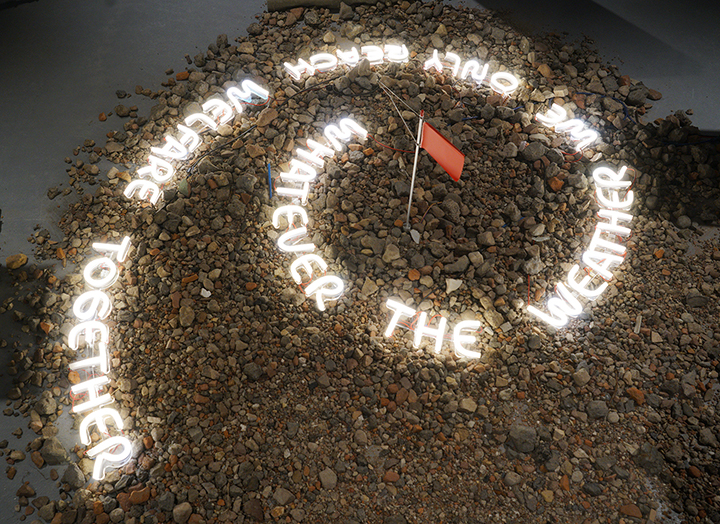
此装置引用了马歇尔计划宣传海报中的一句标语“Whatever the weather, we only reach welfare together”,并将其制成霓虹灯放置于建筑残渣之上,装置的中心有一个随机摆动的风向标。这个装置作为对人类中心主义的一种批评,除了为原文中象征政治、经济、文化气候的“weather”添加真实环境的隐喻之外,还质疑了在当下人类世中,“We(我们)”作为自然“welfare(幸福)”决定者的合理性。
This installation quoted a slogan "Whatever the weather, we only reach welfare together" in the Marshall Project poster, and made it into a neon light and placed it on top of the architectural debris. At the center of the installation there is a wind vane that swings randomly. As a criticism of anthropocentrism, this installation not only adds metaphors of the real environment to the “weather” symbolizing the political, economic, and cultural “weather” in the original text, it also questions the “We” in the current Anthropocene. Reasonableness as the decider of natural "welfare".
Intervention process
for more info: projectanon2017.tumblr.com
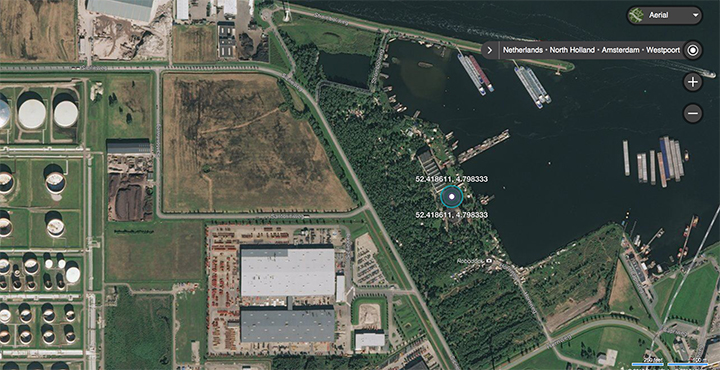
The location
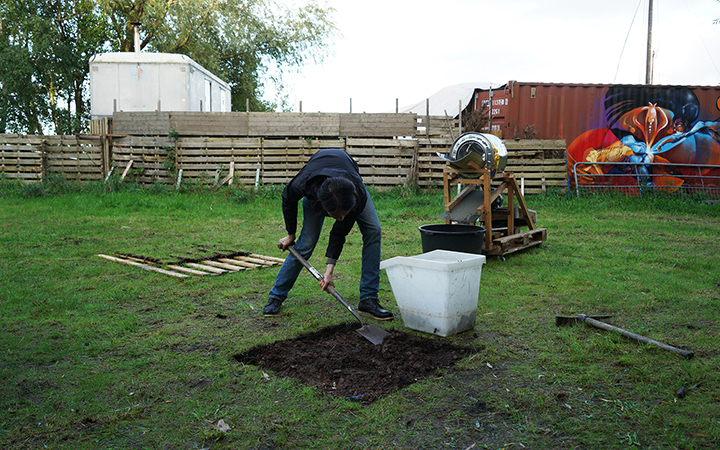
Excaviation process(rubble layer)
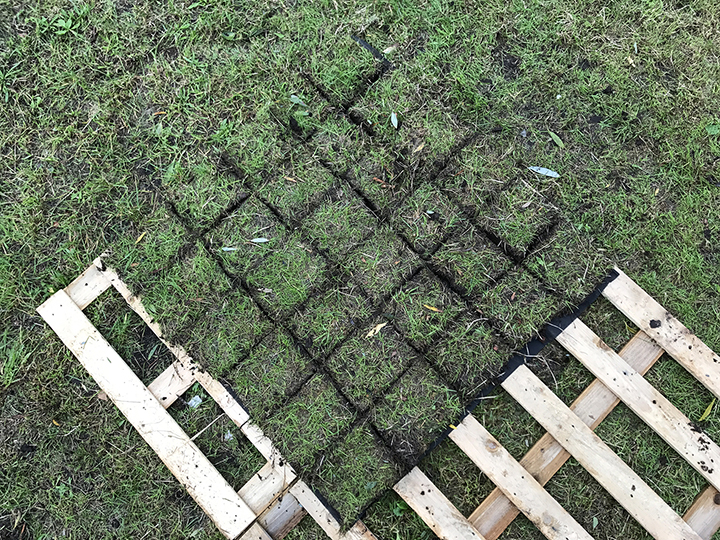
Reserved grass layer
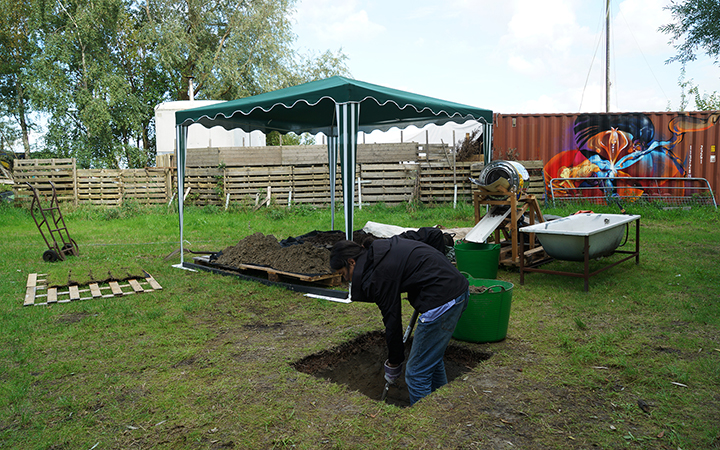
Excaviation process(reclaimed earth layer)
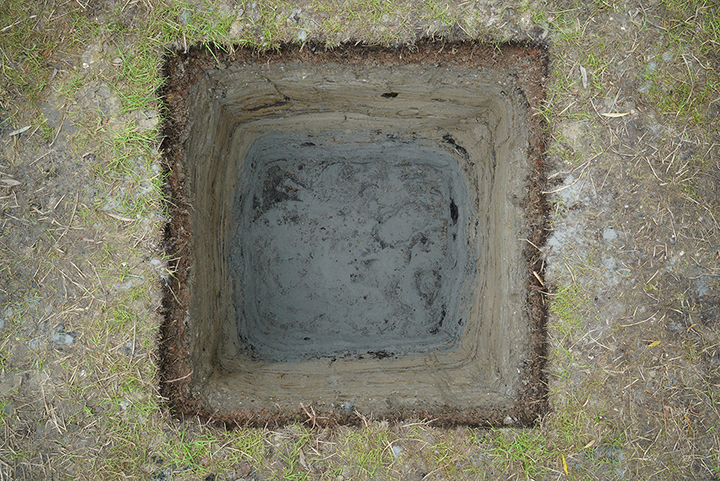
The bottom of the hole(the original seabed layear is revealed)
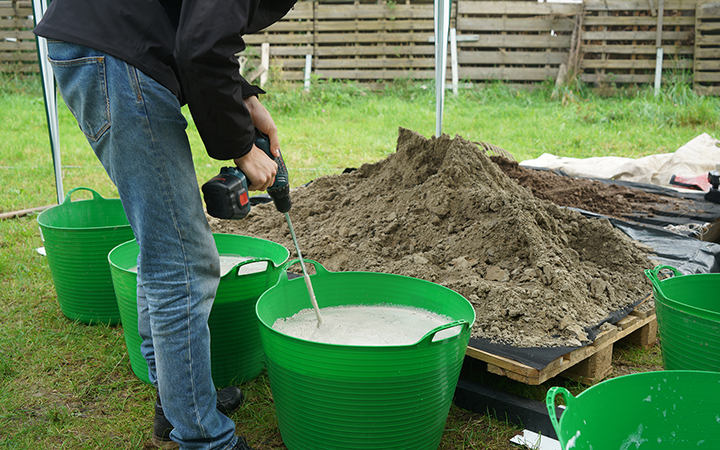
Washing and rinsing